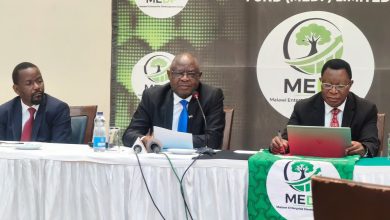
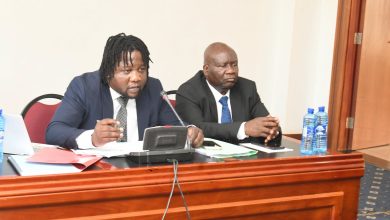
Ministry of Local Government and Rural Development has warned local councils to ensure full absorption of resources under the Reformed K5 billion Constituency Development Fund (CDF) or risk forfeiting the money at year-end.
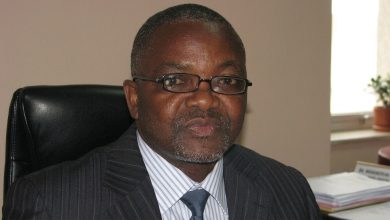
The ministry’s Principal Secretary Moses Chimphepo said CDF was performance-based and councils will be expected to show results once the money is released.

He also announced that the ministry will release about K80 billion to enable councils pay contractors’ mobilisation fees.
“Those that will not implement the project will have failed and money will be forfeited,” said Chimphepo.
He was responding to concerns from the Malawi Local Government Association (Malga) that there was little progress on the ground despite government assurances that resources for CDF projects are being made available.
Chimphepo said the 20 percent contractors’ mobilisation fee would be released this month, but could not give a specific date.
However, he advised councils to proceed with launching projects and handing over sites to contractors while awaiting the funds.
There are at least 2 000 projects expected to be implemented under the programme across the 229 constituencies.
Malga chairperson Isaac Jomo Osman said councils were struggling to reconcile government’s public claims that CDF projects were progressing with the situation on the ground.
He said it is almost a year since the projects were expected to start taking shape, warning that delays could make council chairpersons appear to be failures despite circumstances beyond their control.
“When we look at things on the ground, the situation is that there are delays but in the media the message is that things are working,” said Osman who is also Blantyre City mayor.
He has since called for an extension of the tenure of council chairpersons from one year to two-and-a-half years.
During the meeting in Lilongwe yesterday, some councils reported progress with Mchinji district commissioner (DC) Reinghard Chavula saying her council has made good progress and was at the contract-awarding stage.
She said contractors will soon move on site.
“We have also put in place measures to ensure projects being implemented are of quality. The contractors we are engaging have the capacity,” said Chavula.
Mangochi DC Rodney Simwaka similarly said his council had made progress in implementing the CDF programme.
How the money moves
Under the CDF guidelines, councils must identify contractors and submit their names and project details to the Ministry of Local Government and Rural Development.
The ministry processes the submissions before forwarding them to the Ministry of Finance for funding. The resources are then transferred to local authorities for implementation.
The K5 billion allocated to each constituency is divided among several areas, with 72 percent going towards community development projects. Another 10 percent is earmarked for district-wide projects, while five percent is allocated to rehabilitation and maintenance of infrastructure.
A further eight percent supports economic empowerment initiatives and school bursaries, including allocations for youth economic empowerment, women’s economic empowerment, sports and creative arts and school bursaries.
The remaining five percent covers project management costs, including project appraisal, designs, tendering, supervision, monitoring and evaluation.
The guidelines place local communities at the centre of CDF implementation, with village and area development committees identifying projects and communities expected to help monitor projects and guard against abuse of funds and materials.
Members of Parliament have an oversight role, including participating in identifying constituency needs, endorsing constituency development plans and monitoring projects.
On the other hand, ward councillors are expected to work with village development committees, participate in development and constituency committees and monitor CDF projects in their wards.